
On 25th May 1937, an advert appeared in the Personal section of The Times newspaper. The article read:
‘Haunted House. Responsible persons of leisure and intelligence, intrepid, critical, and unbiassed, are invited to join rota of observers in a years night and day investigation of alleged haunted house in Home Counties. Printed instructions supplied. Scientific training or ability to operate simple instruments an advantage. House situated in lonely hamlet, so own car is essential. Write Box H.989, The Times, E.C.4.’
The person who placed the ad was the infamous Harry Price, self proclaimed Ghost Hunter and paranormal researcher. And the house was what he named the most haunted house in England – Borley Rectory.

The Birth of a Ghost Hunter
Harry Price was born into a working class family in Holborn, London in January 1881. His father was a travelling salesman for a paper manufacturer and it was this line of work that Price originally stepped into when he came of age.
He had his first adventure as a ghost hunter when he was a teenager. The local Manor House in the village was reputed to be haunted, so a young Price persuaded a school friend to accompany him to spend the night and try to photograph the ghost. The two boys heard many strange goings-on during the night, footsteps wandering back and forth, doors opening and closing, but nothing was visible on the plate from the camera they set up when it was developed, and so they didn’t manage to find proof that they were looking for.
Price devoted much of his spare time as an adult developing his knowledge of the unknown, and like most people of the time, became fascinated by the spiritual world. A small inheritance left to him by his grandfather meant that Price could start to devote more time to paranormal research, and night classes in chemistry and engineering helped him develop the skills for ‘proper’ scientific research.
He married Constance Mary Knight in 1908, setting up home with her in Pulborough, West Sussex, where they spent their entire married life. Her family was a wealthy one, and with Constance’s trust and Price’s wages, Harry managed to devote more time to investigating the paranormal and debunking mediums.
Price was looking for fame and fortune in his work as a ghost hunter, and after arguments amongst other members of the Society For Psychical Research, who were mostly made up of the upper classes, he left to set up his own society, The National Laboratory of Psychical Research. He invited newspapers and television to most of his investigations so that they were well publicised, and became the famous ghost hunter we know of today.
He actually became so famous in his work, that if a news article or television program had a need for a paranormal expert, Price would be the person they called.
Borley Rectory
Borley Rectory was built in the village of Borley in Essex, close to the borders of Suffolk, by a Reverend Henry Bull in 1863. It was a huge imposing two storey detached house, with an additional wing built in 1875, and was far too large for the tiny village it sat in. The house dwarfed the church across the road, where the Rev Bull served as vicar, and had over 23 rooms spread across two floors, connected by 3 staircases. There was also considerable room in the cellars and attics.
The Reverend Bull had 14 children, altogether – which could explain how the house grew to be the size that it was.
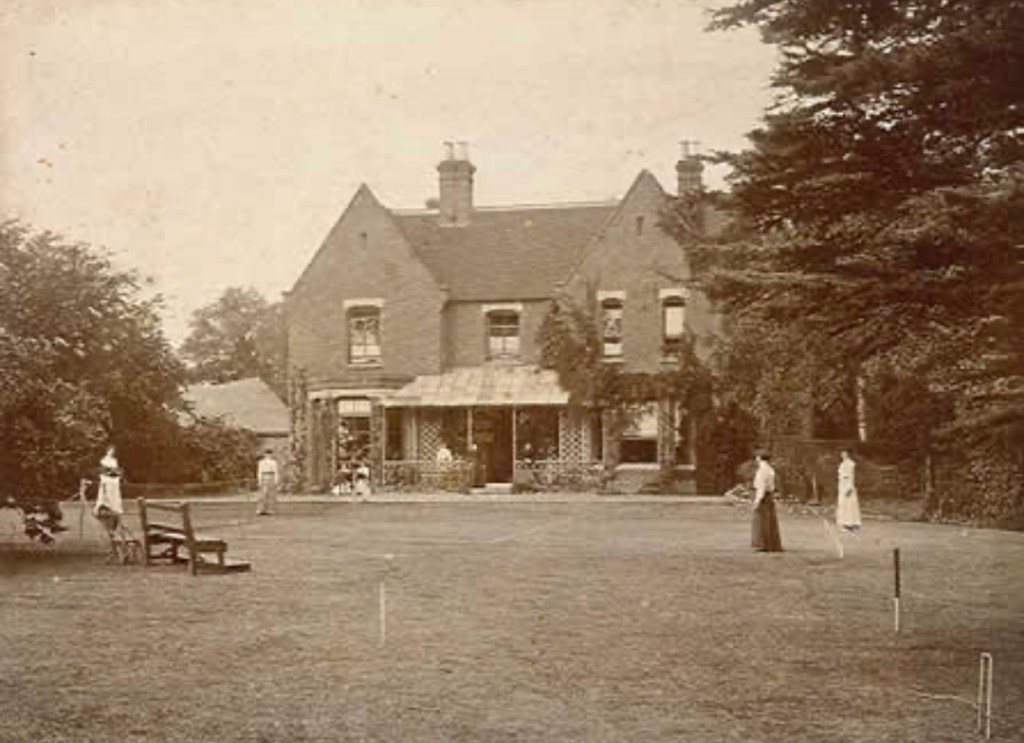
The legends behind the haunting stemmed from stories that the Rectory was built on the site of a 13th Century Monastery with one of the resident monks falling in love with a nun from Bures Nunnery 8 miles away. They planned to elope together, but on the night they were leaving, they were caught and punished in ways befitting of the time – the monk was hung, the nun bricked up in the walls of the nunnery, and the coachman due to take them away was beheaded. And so the ghosts of the monk, the nun and a coach and horses driven by a headless coachman came into play.
There is no evidence of these buildings ever existing in the area so the stories could have possibly just come out of the vivid imaginations of the Bull family children.
The Hauntings of 1929
In June of 1929, a series of articles were written about ghostly goings on at Borley Rectory after a Daily Mirror reporter was invited to experience it by the current Reverend, Guy Smith.
Reverend Bull had passed away in 1892 and one of his sons had taken over the rectory and lived there with his brothers and sisters. The first appearance of the Nun was alleged to have been seen by the Bull sisters, bending over across the lawn. They could only see that the apparition had some sort of black robe or dress on, so assumed it was a nun. There was no closer encounter, so they couldn’t see a face, or a habit, or anything that would give it a religious appearance. There was also a man who appeared in one of the sisters bedrooms, dressed in old fashioned clothes. Again, there was no distinction as to who or what it could have been. It didn’t appear to be robed, such as a monk would be.
The Bull sisters were prolific in recounting their tales of ghostly encounters, and loved nothing better than to gossip with the locals about the haunting of their old family home. Even after they had moved out, they continued telling their stories to anyone who would listen, including the new resident, Reverend Guy Smith.
Reverend Smith was amused by the tales of ghosts in the now dilapidated rectory, but worried that the stories would stop parishioners from attending meetings in the house, so they sought out help. They couldn’t find the details of any psychical research societies, so they reached out to the Daily Mirror, who dispatched a reporter to the house – closely followed by Harry Price.
Once the newspaper started printing reports about the strange goings on at Borley Rectory, visitors started to appear. Endless streams of people turned up in the tiny village, night after night, trying to see the ‘blue nun’, as she had been nicknamed, and the headless coachman.
This, of course, was everything that Harry Price loved. He craved fame and wanted it to come in the form of being known as the best scientific paranormal researcher in the world. For a while, he was everywhere.
You can see newspaper stories about Borley Rectory on his website here –
http://www.harrypricewebsite.co.uk/Borley/PressAlbum/borley-press-album.htm
And here’s a piece he recorded for Movietone News Theatre about psychical research –
There were many allegations against Harry Price by reporters who had attended the rectory during this time stating that the strange happenings were made by Harry and there wasn’t a ghost in sight. He was even caught with a pocket full of pebbles when one reporter had been hit on the back of the head by a stone while Price walked behind him. The reporter’s story was killed by his editor over fears of a libel action against the newspaper, however, and the reporter didn’t speak of it again, until after Price’s death.
A comment by Price’s secretary, Miss Lucy Kaye, sums up the thoughts of many reporters who visited the rectory at the time, “Harry Price attracts poltergeist disturbances as nothing has ever occurred at Borley of that kind in his absence.”
The Smiths, by July 1929, had had enough of the house and the hoardes of people that were congregating on a daily basis, so they moved to the nearby Long Melford and worked from there.
A letter from Mrs Smith, which appeared in the Church Times in October 1945, sheds a little more light on the matter. She said: “I have read with interest your articles and letters on ‘Thump Ghosts’, and as I was in residence for some time at Borley Rectory, Sussex (the most haunted house in England), I would like to state definitely, that neither my husband nor myself believed the house to be haunted by anything else but rats and local superstition. We left the rectory because of its broken down condition, but certainly found nothing to fear there.”
It seems many accounts from multiple sources refute anything paranormal happening around the rectory, except for when Harry Price was present. And when you hear this kind of information, it’s very difficult not to think that Price was at the centre of the mischief.
The Foysters Move In To Borley
The house stood empty and silent for some time before it welcomed a new family, the Reverend Lionel Foyster, his wife Marianne, and their two year old daughter, Adelaide.
In most reports about Borley, they seem to concentrate on the times when the Foysters were in residence, giving detailed accounts of the increase in phenomena.
Marianne seemed to be at the centre of the activity, which included beds being overturned, blankets and sheets pulled off with force, bells ringing throughout the house, objects going missing and reappearing in a completely different place days later, slaps, knocks and no end of the ultimate mischief that you would expect from a naughty ghost. There was also writing that appeared on the wall, directed at Marianne, asking her to say prayers.
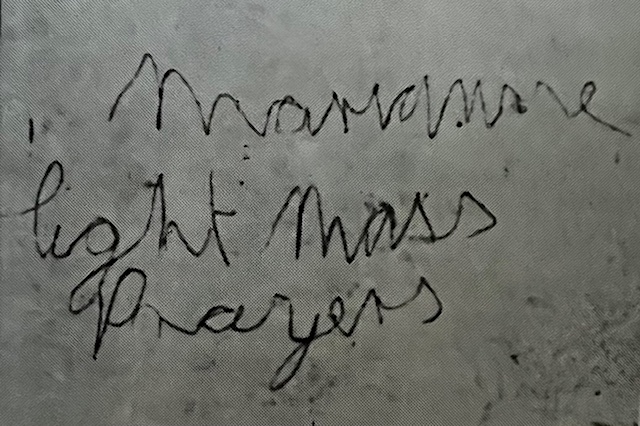

Most of it was nonsensical, as you can see above, and didn’t really say much in the way of anything except for her name. The writing from the spirits does seem suspiciously similar to that of Marianne’s.
Marianne was a lot younger than her husband – there was almost thirty years difference between them – and it was said that the village was ‘dull’ to her, with not a lot for her to do. When all the activity happened only to her, and when nobody else was in the room to witness it, suspicions arose from everyone, including Harry Price.
After his only visit to Borley Rectory between 1929 and 1937, he wrote in a letter to his friend, Dr Fraser-Harris in October 1931:
“Well, we went to Borley as arranged on Tuesday last, and have had two nights on the premises. It is the most amazing case, but amazing in so far that we are convinced that the many phenomena we saw were fraudulent because we took steps to control various persons and rooms, (and) the manifestations ceased. We think that the rector’s wife is responsible for the trouble, though it is possible that her actions may be the result of hysteria. Of course we did not wire to you because although, psychologically, the case is of great value, physically speaking there is nothing in it.”
Later on, in March 1938, writing to a Mr Glover at the BBC, Price states:
“Re Mrs Foyster. If you will consult my Confessions of a Ghost Hunter, first edition, page 35, you will see what I think of Mrs Foyster. I do not mention her by name, but anyone knowing the place would at once realise the person to whom I was referring. In the second and other editions of my book I deleted the last sentence in case the Foysters took objection to it. But as I mentioned in my last letter, the Foysters play a very small part – so far as we are concerned – in the Borley story.”
The sentence that he is referring to, in chapter two of Confessions Of A Ghosthunter, entitled The Most Haunted House In England, says “But we came to the conclusion that the supernormal played no part in the ‘wonders’ that we had witnessed.”
Even the Reverend Foyster was surprised at Price’s writing about his visits to Borley at this time, seeing that they had all agreed it was his wife ‘playing tricks’ and nothing to do with ghosts. Price had agreed to Reverend Foyster’s opinions, but said “of course, no word of this will appear in our report.”
The Foysters moved out of the rectory in October 1935 having received some fame locally for the happenings in their house. They had never met the phantom nun, monk or headless coachman during their time at Borley, and there is never mention of the alleged ghosts that were supposed to be the cause of the haunting.
Reverend Foyster passed away in 1945 and 4 months later, Marianne married again and set up home in Ipswich.
The End Of Borley Rectory
The next Reverend to take up duties at Borley church – a Reverend Henning – decided he didn’t want to live at the rectory. The endless groups of people wandering around the village and house, both day and night, weekly coach trips and organised excursions, as well as the crumbling old house, did nothing to entice him into thinking living anywhere in or near the village would be a good thing.
He took up residency in a rectory in Liston, and this is when Price rented Borley Rectory to begin a year of investigations by his recruits of the newspaper advertisement.
A Mr and Mrs Arbon lived in the cottage at the rectory and had keys for the recruits to collect when they would come to do observations of a weekend, which it seemed were the only times it was done over the year. The recruits were given specific instructions written in what came to be known as the ‘Blue Book‘ – so called because of its cover. It’s title read ‘Private and Confidential. The Alleged Haunting of Borley Rectory. Instructions for observers.’
The instructions included keeping a watch on the Nun’s walk, where the nun was alleged to frequent; spending a portion of the night in the ‘blue room’ where knocks have allegedly been heard; drawing chalk lines around objects in locked rooms to see if they have moved; and if a form or apparition is seen, not to approach the figure, but observe it’s appearance and movements. Most of the observers had never had any experience of the supernatural or the scientific exploration of it, so none of this sat well with the Society For Psychical Research in London who saw Price as nothing but an annoyance. It seemed that every time he appeared in print or on television, they would do anything that they could to contradict his findings. They even published a book, ‘The Haunting Of Borley Rectory – A Critical Survey of the Evidence‘ to coincide with the publication of Harry’s books on the subject.
The observations of the year don’t seem very eventful, but managed to fill up something called the ‘Locked Book’ by Sidney Glanville and can be read here http://www.harrypricewebsite.co.uk/Borley/PriceTenancy/LockedBook/locked-book-index1.htm
Sydney Glanville was one of some forty eight observers who spent time in the rectory, but although most of them didn’t quite know what they were doing, Sydney took his position very seriously.
It was Sydney’s daughter Helen, during a session on a ouija board, gave the nun the name of Marie Lairre from France, but a previous seance held at the rectory allegedly spoke to a nun named Evangeline Westcott. It was also at a seance that Sydney’s son was allegedly told by a spirit called Sunex Amures that the rectory would burn down that night. This was in March 1938.
It didn’t actually burn down until February 1939, so the dates were a little bit out for Mr Amures.

Harry Price published his first book solely about Borley Rectory, The Most Haunted House In England, in 1940 and begins to get copious amounts of letters from people who all say that they have seen the famous nun, even after the rectory had burned down. Even with it gone, the visitors kept coming to the tiny village causing a fuss for residents.
Price wasn’t finished with Borley yet, and continued studying the grounds where the rectory stood. He began excavating the cellars and wells around the property in 1943 and dug up what he said were human bones. Others weren’t so convinced and it was widely thought that the bones were bovine in nature. Harry was having none of this, and although Borley church refused to bury them with a proper service, he managed to persuade the Rector at nearby Liston church to hold a service for the ‘poor nun’ and bury her bones there. Price invited the press to attend and photograph the event, for prosperity.
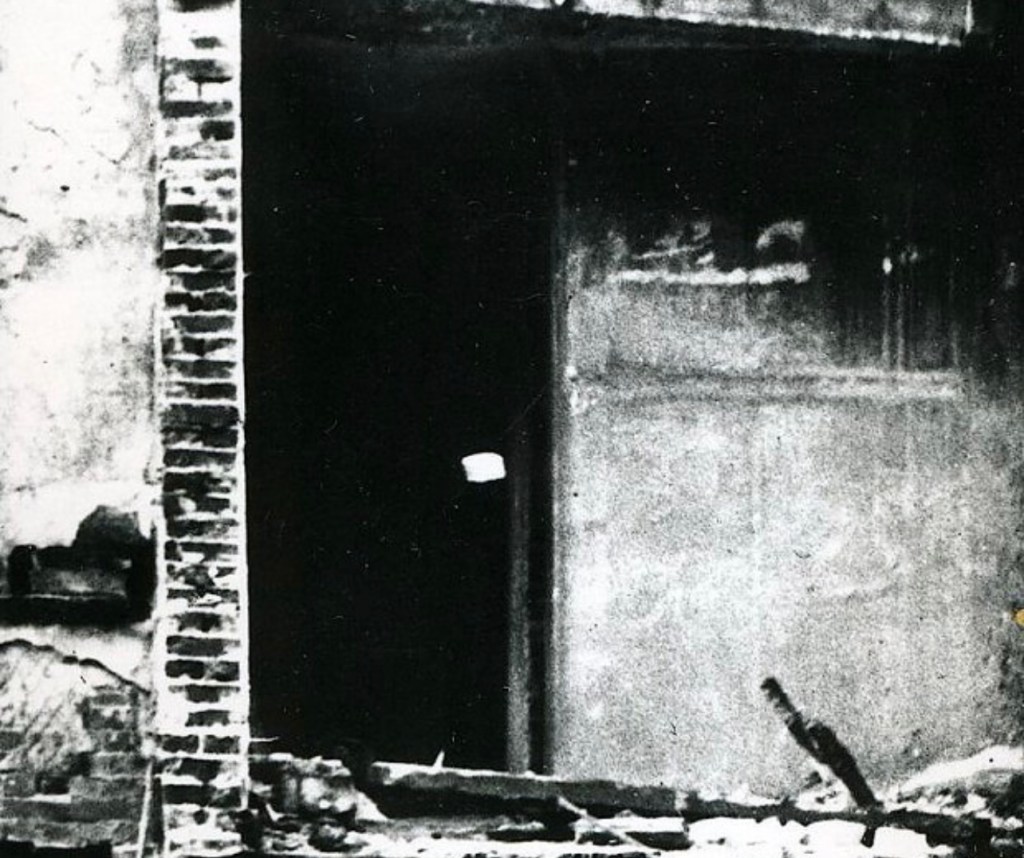
The ruins of the rectory were finally demolished in 1944, with the event being attended by a photographer and researcher from the American magazine Life. It was during this that the famous flying brick photograph above was taken. Price insisted that the brick had levitated from the ground and floated in the air at precisely the time the photograph had been taken, but the photographer stated that the brick came from behind him as if it had been thrown.
Price’s second book about the phenomenon, The End Of Borley Rectory, was published in 1946, bringing him and the village more publicity.
When Price passed away in March 1948, Charles Sutton, who had been the reporter who had caught Harry with pockets full of pebbles when touring the rectory in 1929 was finally able to tell his story without fear of reprisals, but it doesn’t really make much difference to the story. The believers continue to visit, looking for ghosts.
There are many books available to read about the haunting at Borley Rectory, but I feel if you must read about it, you should definitely read about it from someone who was there, no matter what side of the fence you sit on. Harry Price has a chapter on Borley in his book Confessions of a Ghost Hunter, documenting his earlier experiences in the rectory. He then writes The Most Haunted House in England, and The End of Borley Rectory, about later experiences up until the rectory was demolished.
There are also three essays or booklets that were written by Reverend Lionel Foyster called Haunting of Borley Rectory, Diary Of Occurrences; Fifteen Months In A Haunted House; and Summary Of Experiences At Borley Rectory, some of which are documented in The Most Haunted House in England.
But if you read these books that document over 2000 alleged experiences of the paranormal at Borley Rectory, you must read Louis Mayerling’s We Faked The Ghosts of Borley Rectory to see what phenomena could have possibly been a prank or mischief.
At the end of the day, there isn’t much to see if you go to the village of Borley today. It’s still a tiny village from what I remember, and there’s not a single shred of evidence of the rectory left behind. There haven’t been many incidents of people seeing ghosts of nuns or headless coachmen in recent years, and when I visited to shoot some footage for a documentary I wasn’t made to feel particularly welcome.
I can admit that there are some phenomenon that is unexplainable – events from a seance by Louis Mayerling who admits much of it was a hoax cannot be given a reasonable explanation and he said the servants bells all going off at once and blue lightening flashing through the walls still gave him goosebumps decades afterwards.
One would have to say, after researching all aspects of the case, that Borley Rectory was possibly not the most haunted house in England. I mean, there is a house in every county that claims to own this title. But it is still one of the most famous hauntings in the UK, and worth reading up on, if you truly are a fan of the paranormal.
There is also a wonderful program about Harry Price, presented by the deliciously bonkers Tom Baker that you can watch to get some idea of what Price was all about. It also documents the case of the talking mongoose, which is also bonkers.
You can watch it here:


Leave a Reply