
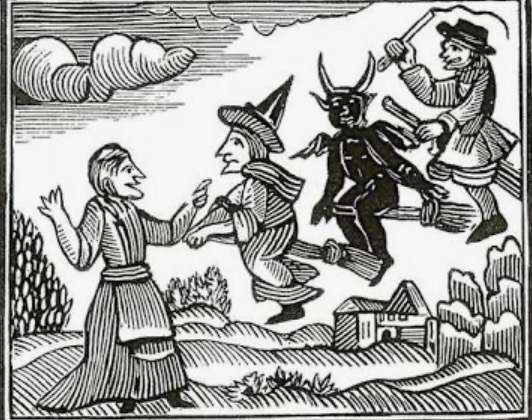
Even in later years, witches appearing in films, books and on television programs were always depicted this way – an old hag with raggedy hair and warts, often with green or grey skin – or the haggard woman with bushy brows and deep set eyes. And almost always female.
In The Beginning
If we go way, way back to when the word witch first came about, it becomes apparent that witches have existed in folklore since ancient times. Circe from Homer’s Odyssey who turns men into animals, is described as a witch. An ancient Egyptian tomb from around 1650BC was found to contain wands and incantations – the very items that we associate with witches and witchcraft. And the ancient Greeks possessed curse tablets that were thought to be used to bind curses to other people.
When you dig deep enough, there are depictions of witches, or alchemists, throughout every corner of the globe, going back to way before you or I ever thought they existed.
Traditionally, throughout time, healers and medicine men or women gathered plants and herbs from the wild, and brewed them in large pots over an open fire. This could be where the familiar image of the witches cauldron came from. In the days when the human race didn’t understand or know any better, taking away someone’s illness or ailment could be seen as the devil’s work or black magic. Witchcraft!
The fact that healers and medicine men or women often lived where they gathered – out in the woods, in caves, or shacks – fits with the image of the old hag with scraggy hair living in the wild and frightening young children. And these poor healers have been persecuted relentlessly through the ages for the only crime of helping people.
Sorcerers and Heretics
Sorcerers and heretics are usually put into the same group as witches and wizards – they are all seen as beings who practice magic to effect the space and people around them.
Heretics are considered as people who don’t conform to normal society or religion, going against the principles that wholesome people would follow. Many were burned at the stake for their beliefs.
Sorcerers were seen as those who used magic to conjure up spirits to do their bidding.
Both sorcerers and heretics have traits or certain skills that could be attributed to witches and witchcraft, which is why you often hear of them being grouped together.
Let’s take a look at the two most famous groups of witches that you may have heard of.
The Pendle Witches
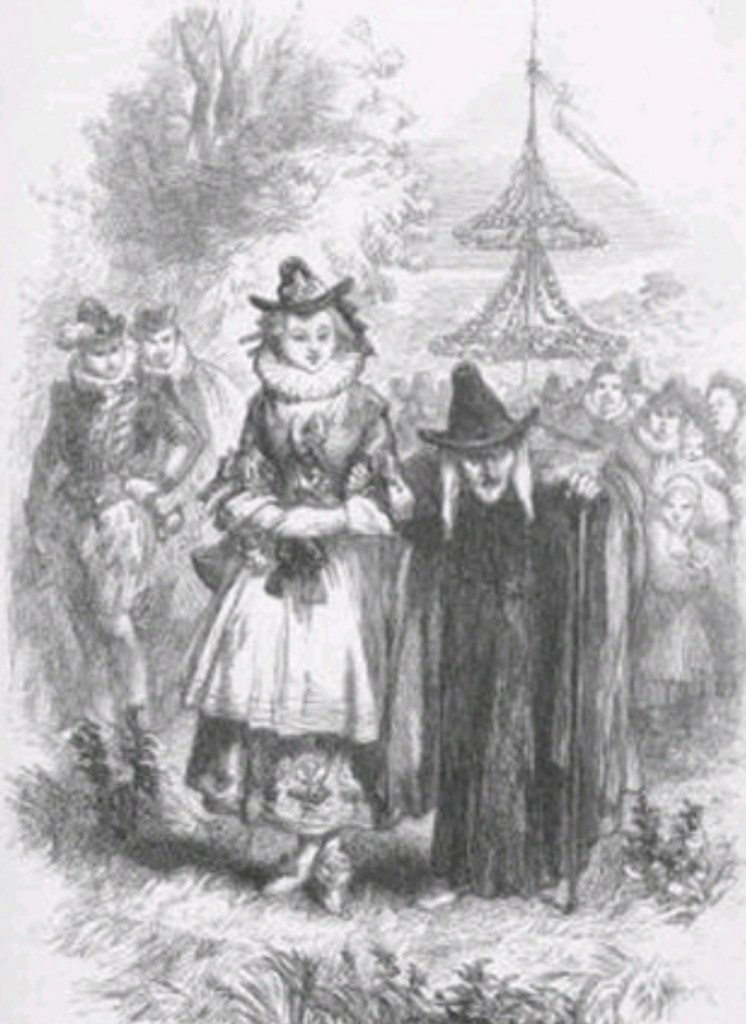
In the summer of 1612, a group of women from Pendle, having been arrested and held at Lancaster Castle, were tried and hanged on the moors above the town, accused and found guilty of witchcraft.
Six of the witches on trial came from two rival families, the Demdike family and the Chattox family. They were both headed by elderly widows, one of which – Elizabeth Southerns, or Old Demdike, was well known in the village as being a witch for over 50 years. She was the resident healer in the village, mixing her potions and herbs to make money to support her family. It was well accepted in Pendle and not a single resident batted an eyelid about the mention of the local village witch until one fateful day in March.
Young Alison Device, part of the Demdike family, was walking in the woods when she bumped into a tradesman, John Law, and asked him for a pin. He refused her, and it’s said that she cursed him under her breath, causing him to have a stroke. He was brought to the local Inn, where his son discovered what had happened and got the local magistrate involved.
Many members of both families were arrested and marched to Lancaster Castle on a path that you can actually follow today. The elder members of the families, Old Demdike and Ann Whittle, known as Old Chattox, quickly implicated daughters and sons of murder, causing madness, and riding a horse to death.
The most surprising detail from the trial, was the fact that one of the star witnesses that condemned them all was the 9 year old daughter of Elizabeth Device, Jennet.
Under the 1604 Witchcraft Act, the local magistrate Roger Nowell had no option than to sentence all the accused to death.
On the 20th August 1612, the ten condemned prisoners were taken to the moors and hanged.
The Pendle Witch trials are amongst the most famous witch trials in history, and you can read about them in the book, ‘The Wonderfull Discoverie of Witches in the Countie of Lancaster‘ by Thomas Potts, the actual clerk of the court where the witches were tried.
You can read it online here:
https://www.gutenberg.org/cache/epub/18253/pg18253-images.html
Courtesy of Project Gutenberg.
The Salem Witch Trials
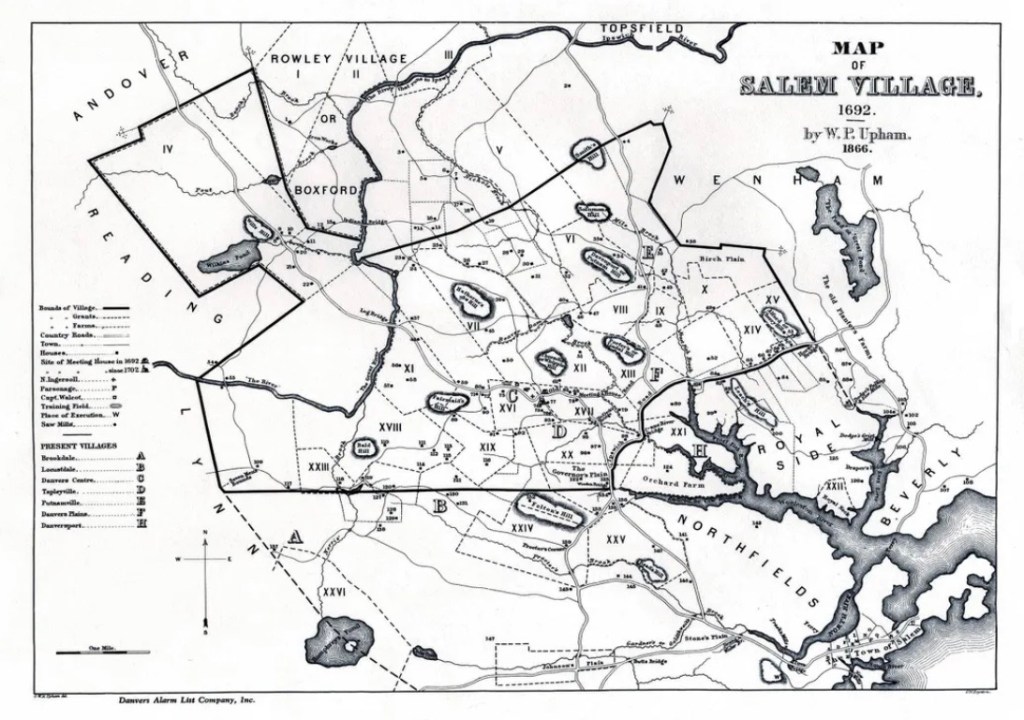
In the 1690s, across the pond in the good old USA, more than 200 people were accused of witchcraft in the Salem Witch Trials.
Salem was a small village in Massachusetts, New England, that was settled by Puritans. They were God fearing simple people who struggled with the harsh winters, failing crops and illness they had seemed to be plagued with since arriving in the United States. There was endless quarrelling between Salem Village and Salem Town regarding property lines, grazing rights, and how the villagers wanted to behave – they wanted to follow their own rules and regulations in accordance with their religion. They had worked their way through many pastors with none of them being able to fit in with the villagers and their ways, until their saviour arrived in the form of Reverend Samuel Parris, who became the village’s first ordained minister.
Reverend Parris had a reputation for being strict in his ways and many villagers would prefer to do whatever he said, rather than risk his wrath.
In January of 1692, Parris’ nine year old daughter Elizabeth and his eleven year old niece Abigail began having ‘episodes’ of some kind, where they would wail, scream and contort their bodies in strange ways. A local doctor blamed the Devil for their behaviour, and said that they were possessed. Not long after, more girls in the village began suffering from the same affliction.
The afflicted girls blamed certain women in the village for cursing them; Tituba, who was the Parris’s housemaid (although she was actually a slave they had ‘bought’), Sarah Good who was a homeless woman, and an elderly lady named Sarah Osbourne.
All three women were brought before a magistrate and the trial began. Good and Osbourne pled innocence, but Tituba is said to have stated that the devil had come to her and made her sign his book to do his bidding. She also pointed the finger at several other women in the village, until a full on witch hunt was in full swing. Even a four year old girl, Dorothy Good, was questioned and found guilty.
During the trials the young girls who had started the whole thing were in court, writhing and screaming accusations as the women were tried. They said that they were being punched and pinched if one of the accused moved a hand in the court, or that the devil had slapped them on the accused behest. It became an absolute freak show of gigantic proportions. And one that sent many to their deaths.
As hysteria was taking a firm hold over the Puritans, one of the accused husbands was asked to stand trial with them, for telling the villagers that they were foolish to believe that any of these people were witches. He refused to do so, condemning himself to torture as a possible witch. He was taken to a field and laid down with a board across his body. Stones were put on top of the board to put pressure on him to confess. He stood his ground and continued to plead his innocence, even when the weight of the stones took the last breath from his body.
By the time the trials were being condemned for their nonsense, many were already dead; one by ‘peine forte et dure’ which was the pressing of the stones on top of the body, many by hanging, and a fair few dying in the prisons before they got to the gallows, including the poor four year old Dorothy Good.
Proof Of Witchcraft
There were many ways a person was proven to be a witch. The simplest ones were if he or she had a familiar, such as a cat, who could shape shift between human and animal form. (Although how they proved that I don’t know.) Or if the person bore a ‘witch’s mark’ such as a mole or a birthmark which was thought to be where the devil had touched the persons body. They would stick a pin in the mark and if it bore no pain then it was the mark of the devil and the person was condemned.
Another test was to bind the hands and legs of the accused and throw them into water. If they floated, they were guilty of being a witch and went to the gallows. If they sunk then they were innocent. Dead, but innocent.
Heretics and witches were thought to be able to be cured by burning the blood of those who were tainted. So again, they would be burned at the stake to cleanse them of their curse, but would end up human barbeque.
The ducking stool was another form of water torture. The accused would be tied to a stool on the end of a long plank, and ducked underneath water to see how long they could remain under the surface. The longer they remained then the more guilty they were, seeing as though they could breath under water. But obviously, they couldn’t and would be drowned as a consequence, if the sudden shock of being dunked into freezing water hadn’t killed them first.
There was ordeal by fire, where the accused were asked to carry glowing hot metal objects for a period of steps or they were walked, blindfolded, over hot coals. The burned body parts were bandaged up and checked after three days. If the wound had healed then they were innocent. If not, then they were hanged as a witch. You can guess how many were innocent after this ordeal.
The Modern Day Witch
The witch of today is less likely to look like an old hag, or mostly, and more likely to resemble just a normal everyday human being. Those I have met while researching this post have been absolutely lovely and totally accommodating when I have asked about their practices and beliefs.
Most follow Wicca as a religion, doing spells under a full moon or on a specific day of the calendar to honour their pagan ancestors.
I even got taught a spell!
A gorgeous witch that I met, who doesn’t want to be named, taught me how to do a money bowl. This spell is supposed to bring you health, wealth and happiness, so I was up for trying it out, seeing as though I’m lacking in at least two of those things. I even roped in a couple of other people to do one.
I did my money bowl according to instructions and lit a candle in it every thursday to allegedly make it work. You’re also supposed to add to it every thursday with the candle lighting so I made sure to do that as well.
I kept the bowl going for two months.
It didn’t work.
I should add that the person who I roped into helping had a windfall of some sorts, but something bad had to happen for the windfall to occur so I’m not entirely sure that would be classed as successful. Unless you go by the mantra that what you cast out will return on you threefold. But then that would mean this person gaining lots of money and then losing three times as much, wouldn’t it? Not having something bad happen to gain the windfall? I don’t know. I’m still unsure as to how saying some words or bringing together some ingredients can alter the universe. Maybe this is why mine didn’t work…
I’ve had an amazing time researching witches and am now itching to return to both Salem and Pendle for a more in depth visit. Pendle is easy, it’s just down the road. Salem is going to require a bit more magic.
If you’re enjoying my posts and want to keep in touch, please subscribe. I promise you will not be bombarded and you’ll make this old witch very happy.
 Sceptic Online
Leave a comment